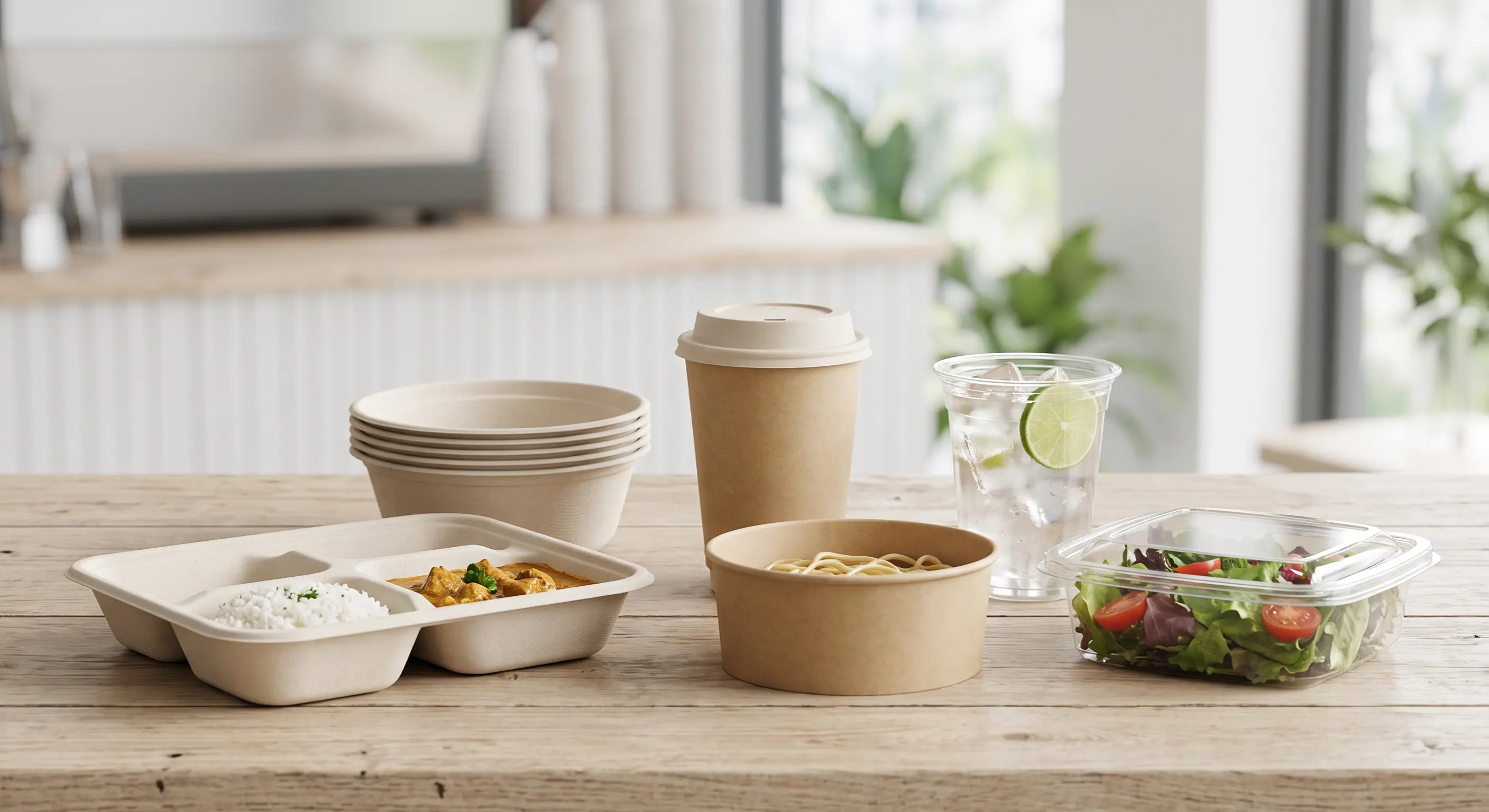
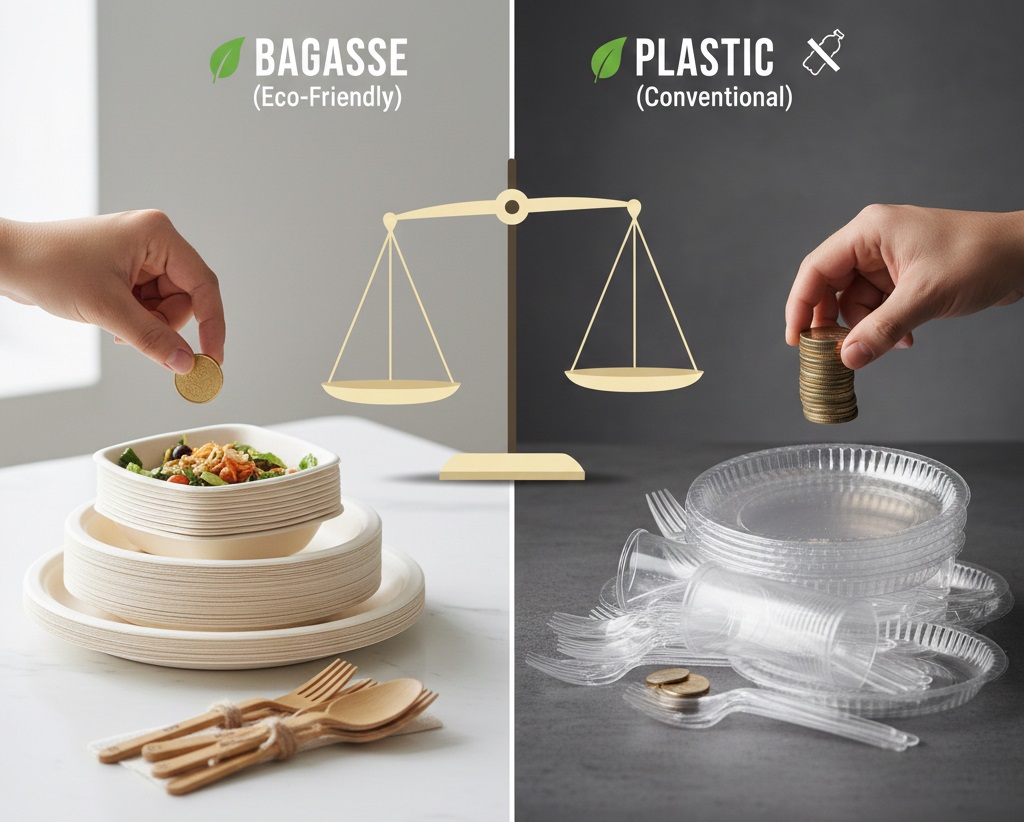
Switching to bagasse tableware is just the start. Here are 10 actionable steps every restaurant owner can take to run a greener, more sustainable operation.
1. Switch to Compostable Tableware
Replace plastic plates, cups and containers with bagasse alternatives.
2. Source Locally
Reduce food miles by sourcing ingredients from local farms.
3. Reduce Food Waste
Implement portion control, better inventory management and composting programmes.
4. Switch to LED Lighting
LED lighting uses 75% less energy than conventional bulbs.
5. Install Energy-Efficient Equipment
Prioritise energy-star rated appliances when replacing equipment.
6. Optimise Refrigeration
Refrigeration accounts for 30–40% of a restaurant's energy use. Regular maintenance makes a significant difference.
7. Use Eco-Friendly Cleaning Products
Switch to biodegradable, plant-based cleaning alternatives.
8. Implement a Composting Programme
Compost food scraps and bagasse packaging together — both are compostable.
9. Offer Plant-Based Menu Options
Plant-based dishes have a significantly lower carbon footprint than meat-based alternatives.
10. Communicate Your Sustainability Efforts
Customers increasingly choose restaurants based on their environmental values.