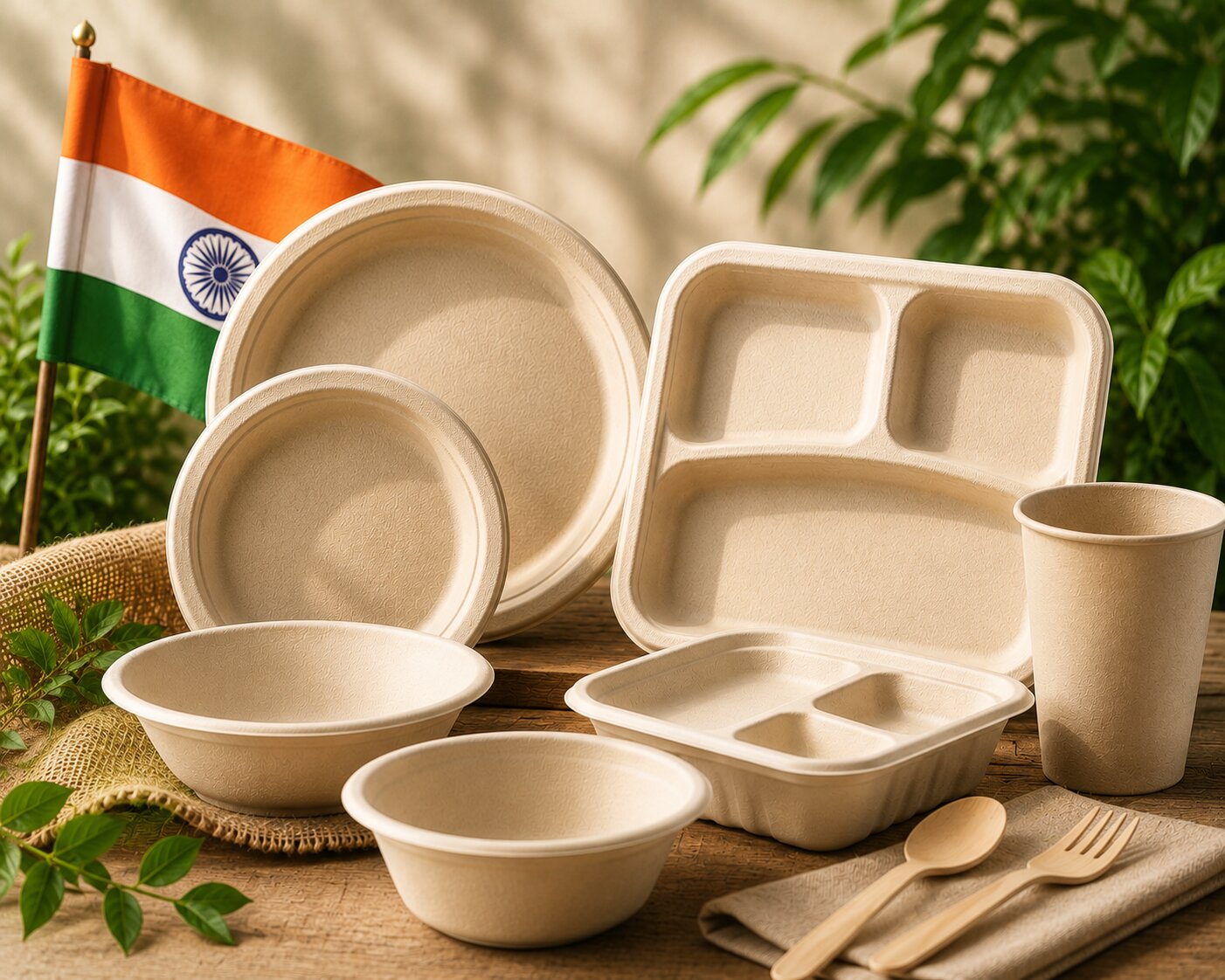
From field to table — a behind-the-scenes look at how Naturomate transforms raw sugarcane bagasse into food-safe, compostable plates, bowls and containers.
Step 1: Sourcing the Raw Material
The journey begins at sugarcane mills across Gujarat and Maharashtra. After the juice is extracted, the remaining fibrous pulp — bagasse — is collected and transported to our processing facility.
Step 2: Pulping and Cleaning
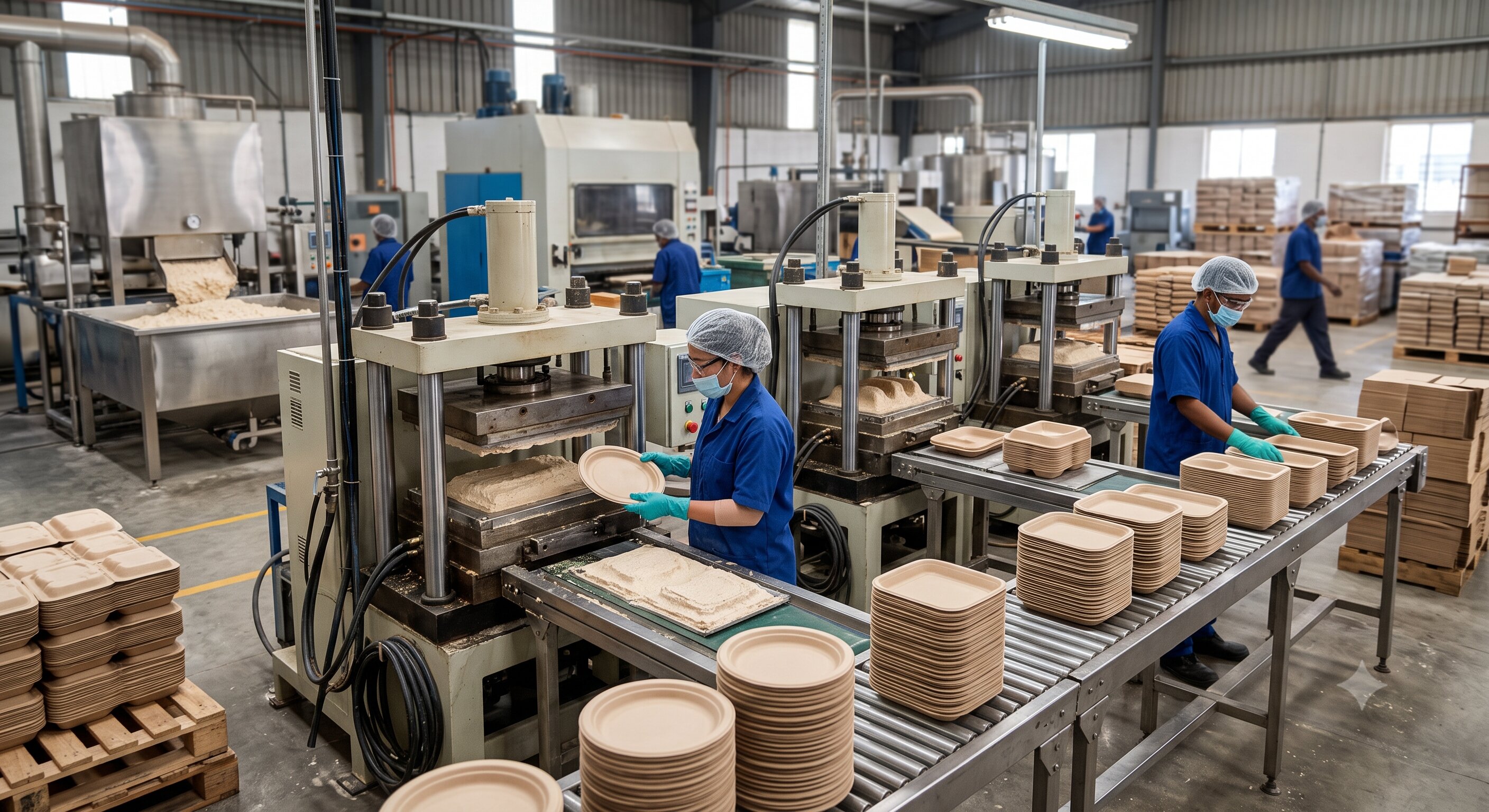
The raw bagasse is cleaned to remove impurities, then processed into a fine pulp using water and mechanical agitation. No bleaching agents or chemical additives are used.
Step 3: Moulding Under Heat and Pressure
The cleaned pulp is fed into precision moulds and subjected to high heat (180–220°C) and pressure. This thermoforming process bonds the fibres into a rigid, dense structure without any adhesives.
Step 4: Quality Control
Every batch undergoes rigorous quality testing — structural integrity, leak resistance, food safety and dimensional accuracy. Products that don't meet our standards are recycled back into the pulping process.
Step 5: Packaging and Dispatch
Finished products are stacked, wrapped in recycled paper and dispatched to customers across India with standard lead times of 5–7 business days.